
Learning to read and write cursive was once a rite of passage for virtually every American schoolchild.
Until the early 20th century, children in the United States were generally taught to write cursive or writingand not the printed writing that is usually taught to young children today. Some people back then thought a person’s character could be judged based on the quality of their cursive writing.
In the first half of the 20th century, writing was often taught as a separate subject in American elementary schools, where children could spend up to 45 minutes a day on it Handwriting lessons and practice.
Students in these years generally learned to print in kindergarten, first and second grades. Cursive writing was typically introduced in third grade or later, in part because some This is what child development researchers believed at the time writing in printed form was easier for young children to learn and align with the fonts they found while reading.
I am a product of this system, Learn cursive writing I’m in third grade and have received awards for my excellent cursive writing from the retired nuns who once worked at my Catholic school. Now I’m a clinical professor of literacy studies and teacher trainerwho deals with reading and writing.
However, my experience is no longer typical, as cursive teaching has become less popular in the last decades. However, some states and schools are reconsidering the value of cursive for today’s students.
A departure from cursive writing
In the 1980s, class time in some schools was devoted to teaching cursive was reduced from 45 minutes per day to 30-60 minutes per week.
And the amount of time available continued to shrink, in part because of the standards-based movement of the 1990s created school curricula that were overflowing with content.
The new math standards called for the integration of data analysis and probability into mathematics instruction as early as the early grades, including kindergarten. Social science standards, meanwhile, reflected a broader approach to history that included numbers such as: B. paid more attention Mansa MusaThe Leader of the Mali Empire in the early 13th century.
Computer at the same time became more widely available in schools and homesmaking the ability to type on keyboards seem like a necessary skill.
The cursive writing seemed outdated.
The Common Core state standards, a statewide set of academic learning standards for K-12 studentswere adopted in some way by 45 states between 2009 and 2014. These standards required that children learn to type on keyboards to ensure that valuable class time left for transcription could be spent on it learn how to type.
A return to italics?
It didn’t take long for the pendulum to swing back in favor of italics in the early 2010s.
North Carolina passed its first cursive law in 2013, intended as a matter of going back to basics. It required students to read and Write in cursive by the end of fifth grade.
The law also required children to memorize their multiplication tables.
By 2015, 14 other states had one Compulsory cursive lessons in the books.
From 2026, more than 25 statesincluding Pennsylvania, Florida, California and Michigan, require cursive lessons.
Lawmakers cite several reasons for requiring cursive writing in schools.
Pennsylvania and Florida legislature argue, for example, that an informed citizenry must be able to read historical documents, which are often written in cursive.
In 2025, a representative from Michigan suggested that reading cursive was also essential to preserving family history. Her granddaughter was able to read a letter that her late father, the legislator’s son, had written in cursive only because of her school still chose to teach this skill.
With more modern realities in mind, a California assembly member suggested that cursive could be used to ensure students don’t use artificial intelligence to do it do their school work.
Advantages of italics
The ability to write in cursive can be beneficial to learners.
In a 2020 study in Norway, 12 adults and 12 adolescents were connected to brain imaging machines during their stay wrote in cursive, drew and typed.
They found that writing in cursive activates the brain waves and neural pathways used for learning and memory. This also involves learning to write in cursive better outcomes for learners with dyslexia and dysgraphiaa neurological learning disability that makes writing difficult.
Other studies have shown that cursive writing affects writing fluency and quality. Some studies show The Cursive writing can help people write fasterwhile others Studies have found The Children may not write in cursive have a speed advantage.
First graders in Portugal who were taught cursive wrote in longer “bursts” that the Researchers attributed this to the continuous flow of cursive writing.
There’s even research that suggests that cursive writing develops students’ early reading skills, not just their composition skills. A 2019 study of 141 first graders found that children learned to read cursive better at the end of the school year than classmates who did not.
That is a theory Learning cursive trains the brain to process letters more effectively.
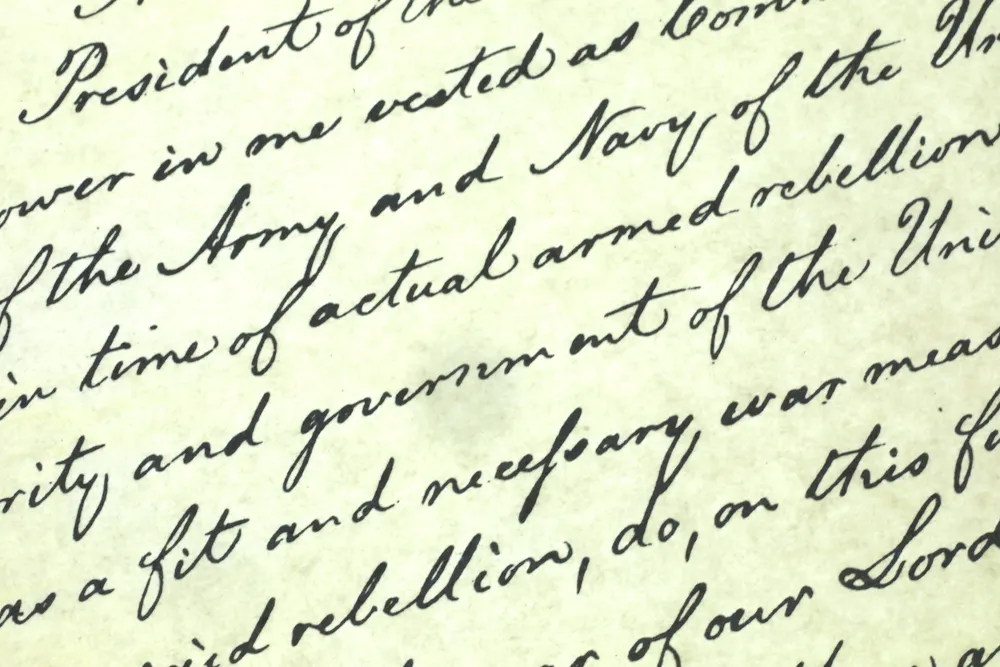
Italics in today’s world
Not everyone is convinced that cursive writing deserves a comeback tour.
First of all, the science is more uncertain than the proponents of italics suggest. There are solid evidence that handwriting is better at learning and memorizing than typing. What is much less clear is whether italics specifically have an edge above ordinary pressure.
It is possible that much of the recent brain research will remain quoted in Pennsylvania statehouses to California was conducted on children who printed out their letters rather than putting them together in a loop.
However, teaching cursive in today’s schools is not necessarily easy.
Many of today’s teachers and many of the future teachers never learned cursive themselves, meaning states are now requiring teachers to teach a skill they don’t have. Then there is the question of time. How to teach cursive writing correctly Eat for about 70 minutes per week as children learn to master this skill. How does this fit into a busy school day? Furthermore, this is not the case for every child I will love learning cursive.
Just ask any teacher who tried to get a room full of 7-year-olds excited about learning how to correctly write a capital G in cursive.
Mary Jean Tecce DeCarloClinical Professor of Literacy Studies, Drexel University
This article was republished by The conversation under a Creative Commons license. Read that Original article.

This story was originally featured on Fortune.com
[ad_1]